
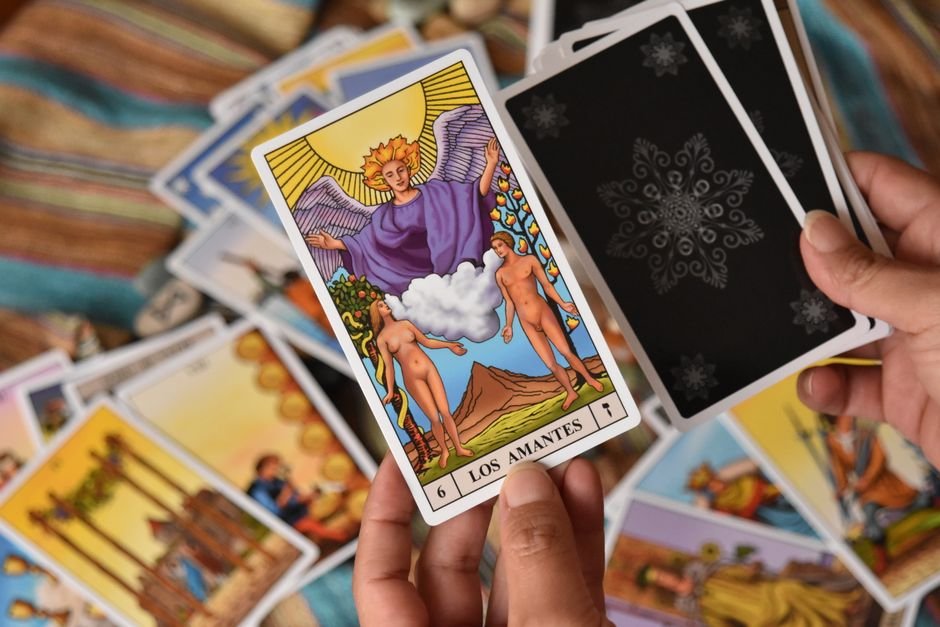
Your tarot card of the week is a single card pulled at the start of the week to act as a theme, lens, or companion for the days ahead. Unlike a daily pull, which captures a moment, a weekly card gives you time to sit with one message and watch it unfold in real situations — a difficult conversation, a budgeting decision, a relationship question. In this guide, you’ll learn the tarot card of the week meaning in practical terms: how to pull your card properly, how to interpret it across different areas of life, and how to actually use it rather than just admire it.
What Does “Card of the Week” Actually Mean?
A card of the week is a weekly guidance ritual: you shuffle your deck, ask a clear question, pull one card, and treat it as the dominant energy or lesson for the next seven days. The key word is theme, not prediction. A weekly card describes the quality of the week — its challenge, opportunity, or undercurrent — rather than promising specific events.
Because you live with the card for a full week, it works differently from a one-card-a-day pull. Daily draws are snapshots; weekly draws are time-lapses. You get to test your interpretation against real events, which is one of the fastest ways to build genuine tarot fluency. If you’re new to this rhythm, the one-card-a-day tarot practice is a great companion habit — many readers alternate: a daily pull on weekdays, a deeper weekly card on Sunday evening.
How to Pull Your Card of the Week: A Step-by-Step Method
1. Choose a consistent time and place
Most readers pull their weekly card on Sunday evening or Monday morning, before the week’s noise begins. Consistency matters more than timing — same ritual, same space, same deck. If your deck feels “sticky” or confusing, that’s usually a signal to cleanse it or simply take a break, not to panic about the message.
2. Ask a clear, open question
Vague questions produce vague readings. Instead of “What’s coming this week?”, try:
- “What energy should I work with this week?”
- “What lesson does this week hold for me?”
- “What should I pay attention to over the next seven days?”
Keep the question open-ended. Yes/no framing forces a weekly card into a job it wasn’t designed for.
3. Shuffle with intention, then draw one card
Shuffle until it feels done — there’s no magic number. Some readers cut the deck and take the top card; others fan the cards and choose instinctively. Both work. Draw exactly one card. Two cards dilute the focus; the whole point of a weekly card is depth over breadth.
4. Write it down immediately
Record the card, the date, your question, and your first impressions — even if the impressions are “I have no idea what this means.” Note whether it’s upright or reversed (if you read reversals), and whether it’s a Major or Minor Arcana card. This record becomes your reference point at week’s end.
5. Set a check-in point
Decide now when you’ll revisit the card — usually Saturday or Sunday. Midweek glance is fine, but the real work happens in the end-of-week review, where you compare the card’s message against what actually happened.
Interpreting Your Weekly Card: A Practical Framework
Interpretation is where most readers stall. Rather than hunting for the “correct” meaning, work through three layers:
- Card layer: The traditional meaning. What does this card generally represent — growth, delay, passion, rest?
- Context layer: Your life right now. Which area does the card’s energy most clearly map onto: work, love, money, health, creativity?
- Decision layer: The week’s actual choices. How should this card shape one or two concrete decisions you’re facing?
The decision layer is the most neglected and the most valuable. If your card of the week is the Seven of Cups and you’re choosing between two job offers, the card isn’t predicting the outcome — it’s flagging that illusion and option-overload are your real risks this week. That’s actionable.
Major Arcana vs. Minor Arcana weekly cards
The arcana changes the weight of the message. A Major Arcana card (the Tower, the Star, the Chariot) signals a bigger, more formative week — something with lasting consequences or a deeper lesson. A Minor Arcana card (the Three of Swords, the Eight of Pentacles) usually points to everyday texture: moods, routines, conversations, small wins and frictions. Neither is “better.” A week guided by the Four of Swords may simply be telling you to rest — and that’s a perfectly important message.
Interpretation by intent: a quick reference table
| Intent / Area | What the weekly card highlights | How to apply it | Example |
|---|---|---|---|
| Love & relationships | The emotional tone and connection patterns of the week | Notice where you can communicate more honestly or set one boundary | Two of Cups → initiate one meaningful conversation |
| Career & work | Where your effort, ambition, or friction will concentrate | Match the card’s energy to one work priority; don’t chase five | Eight of Pentacles → focus on craft and steady output, not visibility |
| Money & resources | Spending, saving, or value-related habits under the surface | Pick one financial habit the card points toward and act on it | Four of Pentacles → review where you’re holding on too tightly |
| Personal growth | The inner lesson the week is quietly teaching | Journal once midweek: “Where has this energy shown up?” | The Hermit → schedule genuine solitude before making a big call |
Journaling Your Weekly Card (Without Overcomplicating It)
You don’t need a beautiful grimoire. A simple three-prompt journal entry takes five minutes:
- On pull day: What is my gut reaction to this card? What do I want it to mean — and what do I hope it doesn’t mean? (The gap between those two is often where the real insight lives.)
- Midweek: Where have I seen this card’s energy so far — a conversation, a delay, a mood, a coincidence?
- Week’s end: Did the theme hold up? What would I interpret differently now? One sentence on what I’d do differently next week.
Over a month, these entries become a personal meaning-dictionary that no tarot book can replace, because it’s built from your own verified experiences.
Common Mistakes With Weekly Tarot Cards
Re-pulling because you dislike the card
This is the number one mistake, and almost every reader has done it. If you pull the Ten of Swords and immediately reshuffle for something nicer, you’ve turned guidance into a slot machine. A card you resist is usually the card doing its job. Sit with it for 24 hours before deciding what it means — uncomfortable cards often read completely differently by Thursday.
Treating the card as a fixed prediction
A weekly card describes energy, not destiny. If you pull the Three of Swords and brace for heartbreak all week, you’re reading defensively, not reflectively. Ask instead: “Where might disappointment or miscommunication arise, and how do I want to handle it if it does?”
Overloading the reading
Pulling a weekly card, then a clarifier, then a “what to avoid,” then a “what to embrace” turns one clean message into a committee meeting. If the card genuinely confuses you, one clarifier is acceptable. More than that, and you’re just negotiating with the deck.
Ignoring the card by Wednesday
The most common failure isn’t misreading — it’s forgetting. Set the card as a phone wallpaper, prop it on your desk, or photograph it into your journal. Physical visibility is what converts a pull into a practice.
Turning the Card Into Decisions: The Real Value
The weekly card earns its keep when it touches an actual decision. Here’s a simple loop that works:
- Name one live decision — a purchase, a conversation, a yes or no you’re sitting on.
- Ask how the card reframes it. The Chariot asks: am I driving this, or being dragged? The Two of Swords asks: what am I refusing to look at?
- Choose one small action the card points toward, and take it within 48 hours while the reading is fresh.
- Log the outcome at your week-end review. This is how you learn whether your interpretations are calibrated or biased.
Done consistently, this loop does more for your tarot skill than any course, because it closes the gap between reading and reality. If you’d like a second opinion on a bigger question — a career crossroads or a relationship pattern — a session with one of the best online tarot reading sites in 2026 can complement your personal weekly practice with an outside perspective.
Adapting the Ritual to Your Life
Weekly card practice should flex around your schedule, not become another obligation. A few honest variations that work for real people:
- Minimal version: Pull Sunday night, photograph the card, one journal line Friday. Total time: about three minutes a week.
- Deep version: Pull Sunday, journal three times (pull day, Wednesday, Saturday), and connect the card to one concrete decision.
- Shared version: Pull cards with a partner or friend group and compare notes at week’s end — the differences in interpretation are half the learning.
If you miss a week, skip it and start fresh next Sunday. Guilt-driven “catch-up” pulls for a week that’s already over teach you nothing.
FAQs
When is the best time to pull a tarot card of the week?
Sunday evening or Monday morning works best, because you pull before the week’s events can bias your interpretation. The exact time matters less than consistency: same day, same ritual, same deck each week. If your week starts on a different day, anchor the pull to that day instead. The goal is a stable routine you can compare week over week.
Should I read my weekly card upright only or use reversals?
Either is fine — consistency is what matters. Reversals add nuance (blocked, internalized, or excessive energy), which can be useful for a full week of reflection. If you’re newer to tarot, start upright-only for a few months so you build clean foundations, then introduce reversals gradually. Don’t switch systems midweek, or you’ll muddle your own reference points.
What if I pull a “scary” card like Death or the Tower?
Neither card predicts literal disaster. Death almost always signals transition and endings that make room for something new; the Tower signals sudden restructuring of something unstable. For a weekly card, treat them as heads-up cards: stay flexible, avoid forcing rigid plans, and watch for change already in motion. Record your first reaction, then reassess honestly at week’s end.
Can I pull a card of the week for a specific question, like love or career?
Yes. Frame the question clearly before shuffling — “What should I know about my love life this week?” — and write it down with the card. A focused weekly card often reads more sharply than a general one. Just keep the same card for the whole week and resist pulling additional cards for other topics; that fragments the practice into multiple daily draws wearing a weekly costume.
How long does it take to see benefit from weekly tarot practice?
Most readers notice a real shift within four to six weeks of consistent pulls and journaling. The benefit isn’t mystical prediction — it’s pattern recognition: you start seeing how one card’s energy actually moves through work, money, and relationships over seven days. That feedback loop builds interpretation skills faster than any amount of book study, because every reading gets checked against real life.
