
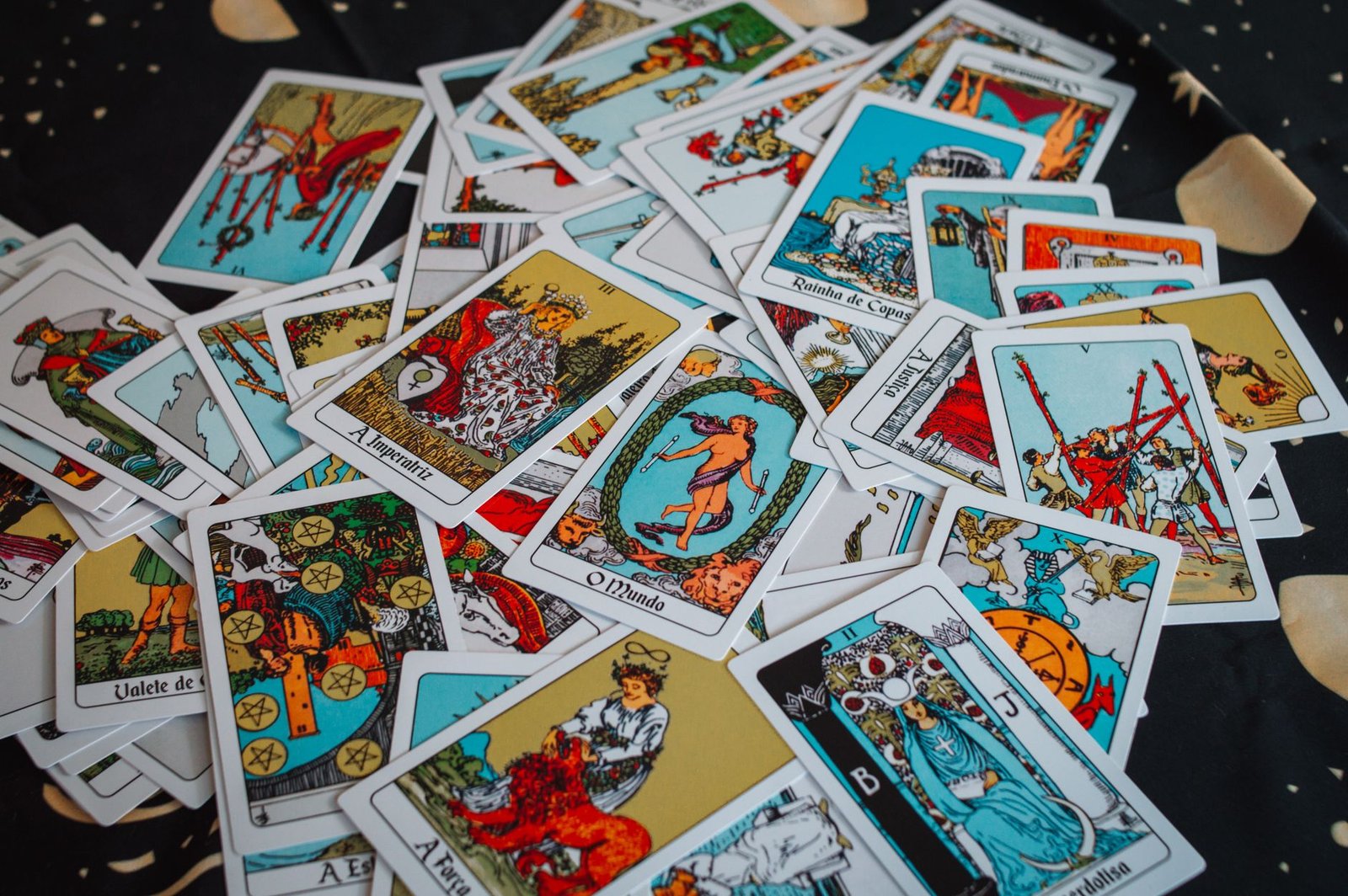
A weekly tarot forecast is the most misused format in tarot. People pull seven cards on Sunday night, read them like seven separate horoscopes, and then spend the week trying to remember what the Three of Swords was supposed to mean for Wednesday. By Friday the spread is a blur, and the forecast has done nothing except make them anxious.
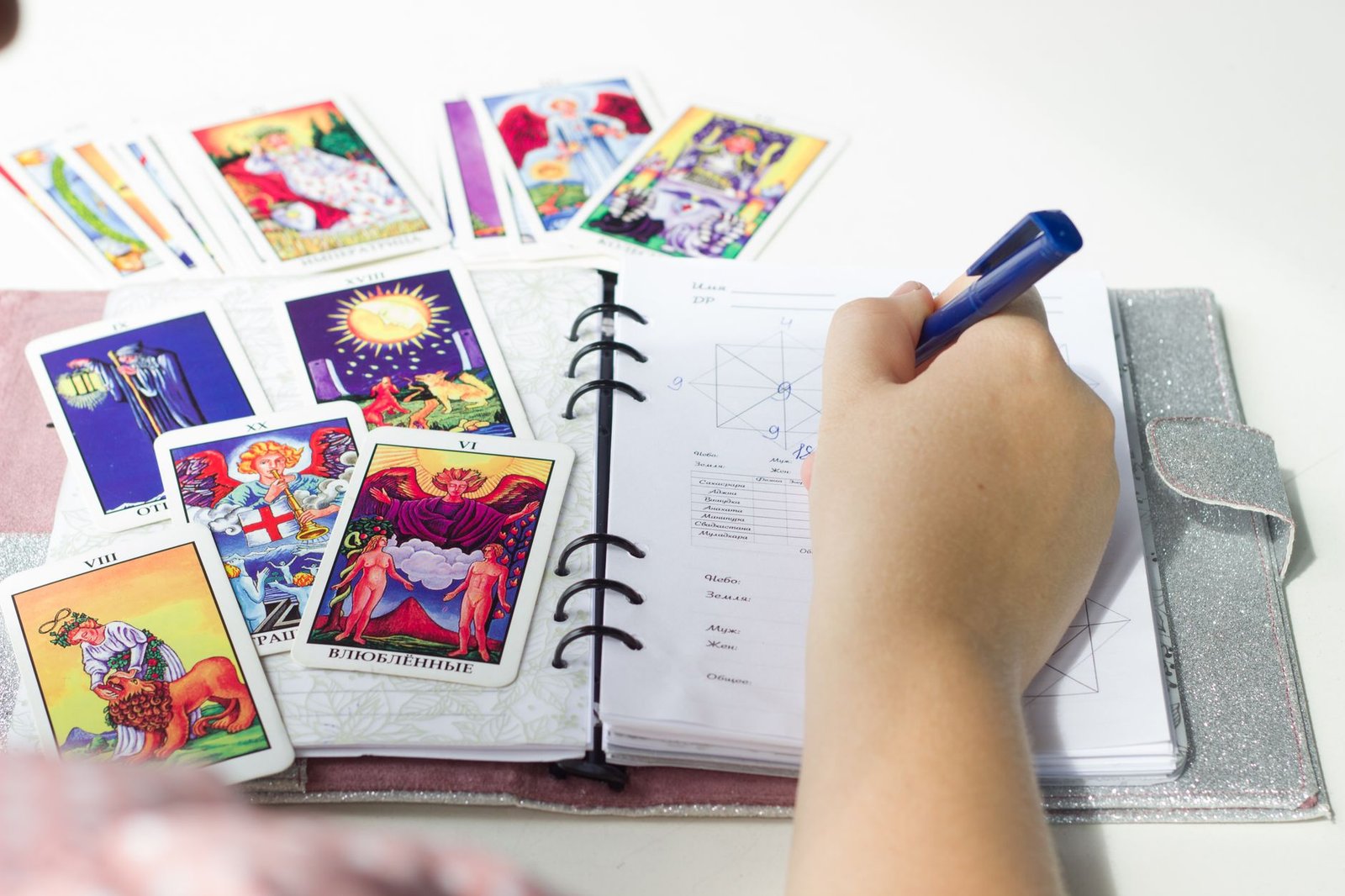
Done well, a weekly forecast is not a prediction of seven days. It is a map of the week’s weather — one dominant theme, two or three pressure points, and a clear idea of when to push and when to wait. This guide explains how a weekly tarot forecast actually works, how to build one you will still remember on Thursday, and how to tell a useful forecast from a decorative one.
What a weekly tarot forecast is — and is not
A weekly forecast covers a seven-day cycle with a fixed number of cards, usually three to seven, drawn once and read as a single narrative. The cards are not assigned to hours or guaranteed events. They describe conditions: where your attention will be pulled, which decisions will feel heavier than they should, and what kind of effort is likely to be rewarded.
That distinction matters because it changes how you read. If you treat each card as a scheduled event, a difficult card on Thursday becomes a thing to dread. If you treat it as a condition, the same card becomes information: expect friction there, so plan around it.
What a weekly forecast cannot do is tell you what another person will do, which numbers will appear, or whether a specific outcome is guaranteed. Anyone who promises that is selling certainty, not tarot. A good reader will tell you the range of likely conditions and leave the decision with you.
Daily pull vs. weekly forecast vs. monthly spread
Most confusion about weekly forecasts comes from mixing formats. They answer different questions and they fail in different ways.
| Format | Cards | Best question it answers | Typical failure |
|---|---|---|---|
| Daily single card | 1 | What should I notice today? | Becomes a mood ring; every card is read as good or bad |
| Weekly forecast | 3-7 | What is this week’s dominant theme and where is the friction? | Read as seven mini-days, so the narrative disappears |
| Monthly spread | 6-12 | What arc am I moving through this month? | Too abstract to act on; cards blur into platitudes |
| Decision spread | 2-5 | What happens if I choose A rather than B? | Consulted repeatedly until it says what you wanted |
If you already keep a daily practice, a weekly forecast sits above it rather than replacing it. The one-card-a-day routine gives you texture; the weekly spread gives you direction. Read the week on Sunday, then let the daily card confirm or complicate it.
How to build a weekly forecast that survives until Thursday
The reason most weekly spreads collapse is structural, not intuitive. Seven cards in a row with no roles produce seven opinions. Give each position a job and the spread holds together.
The five-position weekly layout
- Theme of the week. One card, read as the headline. Everything else gets interpreted in relation to it.
- What supports you. A resource already available — a habit, a person, a piece of leverage you keep forgetting.
- Where the friction sits. Not a disaster, a pressure point. Usually a conversation, a deadline, or a decision you have been deferring.
- What to do about it. The only advice card in the spread. Read it as a verb, not a mood.
- What you will know by Sunday. The closing card. This is the one you check at the end of the week to see whether the forecast was accurate.
Five cards is enough for a weekly forecast. Seven works if you want day markers, but then you must read them as a sequence — Monday’s card sets up Tuesday’s, and so on — rather than as seven independent fortune cookies.
If you want day markers, use three blocks not seven days
A practical compromise: draw three cards for the start of the week, the middle, and the end. Start covers Monday and Tuesday, middle covers Wednesday and Thursday, end covers Friday through Sunday. Three blocks preserve the narrative. Seven days destroy it. If you want a genuinely dated spread, use a format built for it — like the weekly reading structure here — rather than retrofitting a seven-card line.
Which cards matter most in a weekly forecast
Not every card carries the same weight over seven days. Some cards set the tone for the whole spread; others are local.
- Major Arcana — read as the week’s conditions, not events. A Major in the theme position usually means the week is about a shift larger than your to-do list.
- Aces — openings. An Ace in the support position suggests something is available now that will not stay available indefinitely.
- Court cards — usually people or a mode of behaviour you need to adopt. If two courts appear, decide which one is you before assuming both are other people.
- Fives and Tens — friction and completion. A Five in the friction position is almost redundant, which is itself useful confirmation.
- Reversals — treat them as internal or delayed rather than negative. A reversed card in a weekly spread more often means “not yet voiced” than “will go wrong”.
A ten-minute weekly forecast routine
This is the checklist worth keeping. It is deliberately short, because a routine you skip is worthless.
- Same time each week. Sunday evening or Monday morning. Consistency is what makes week-to-week comparison possible.
- One question, written down. “What do I need to know about the week of [date]?” Not three questions layered together.
- Shuffle until the deck feels settled, then stop. Do not shuffle for five minutes hoping for a better draw.
- Lay the five positions left to right. Photograph the spread — you will not remember it accurately by Friday.
- Write one sentence per card before interpreting. Description first, meaning second. This prevents you from reading the week you fear instead of the week in front of you.
- Name one concrete action. The forecast is not finished until it has produced a single thing you will do differently.
- Review on Sunday. Two minutes: which card was accurate, which was noise. Ten weeks of this will teach you more than any book.
How to read a published weekly forecast
Most people do not draw their own spread — they read one. That is fine, but the reading rules change.
First, check whether the forecast is collective or individual. A published weekly forecast written for a wide audience is a thematic piece, not a reading for you. Its value is in naming a pattern you might otherwise miss, not in telling you what will happen on Wednesday.
Second, notice whether the writer gives you conditions or promises. “Expect friction around an unspoken obligation” is a condition you can test. “You will receive good news on Friday” is a promise nobody can make.
Third, use it as a prompt for your own pull rather than a substitute. Read the collective forecast, then ask your own deck the narrower question it raised. That sequence — wide frame first, personal question second — is how professional readers use public forecasts themselves.
If you are choosing where to read, the criteria are the same ones that separate a real reader from a performative one: transparency about method, no guaranteed outcomes, and a willingness to say “this spread is unclear”. Our comparison of online tarot reading sites covers how to screen for those signals before you pay for anything.
Five mistakes that ruin a weekly forecast
- Redrawing when the spread is uncomfortable. The uncomfortable spread is the information. Redrawing trains you to use tarot for reassurance only.
- Assigning exact days to exact cards. Seven cards do not divide neatly into seven days, and life does not respect the grid.
- Reading the whole week through one card. The theme card frames the spread; it does not erase the other four.
- Ignoring the advice position. Most people spend their time on the friction card and skip the one that tells them what to do.
- Never reviewing. Without a Sunday check, you are collecting impressions rather than building skill.
What a forecast should change by Friday
A useful weekly tarot forecast produces one of three outcomes: you had a conversation earlier than you would have, you delayed a decision that would have been made badly, or you noticed a resource you already had. If none of those happened, the spread was entertainment — which is allowed, but it is not the same thing as guidance.
Keep the bar there. Not “did the cards come true”, but “did the week go differently because I read them”. That question is answerable, and it is the only one that makes a weekly practice worth continuing.
FAQ
How many cards should a weekly tarot forecast use?
Three to five is the practical range. Five positions — theme, support, friction, action, outcome — give you a narrative without turning the reading into a checklist of days. Seven works only if you read them as a sequence rather than as seven separate predictions.
When is the best day to draw a weekly forecast?
Sunday evening or Monday morning, before the week’s obligations start dictating your mood. The specific day matters less than consistency: the same slot each week is what makes comparison across weeks meaningful.
Can a weekly forecast predict specific events?
No, and you should be cautious with anyone who says otherwise. A forecast describes conditions and likely pressure points. It can tell you that a conversation is overdue; it cannot tell you what the other person will say.
What if a frightening card appears in my weekly spread?
Read it as a condition rather than an event. Cards like the Tower or Three of Swords usually point to something already strained — a deadline, an unspoken resentment, a decision being avoided. The card names the pressure; your choices decide the outcome.
Should I redraw if the forecast feels wrong?
No. Sit with it for two days before deciding it was inaccurate. Weekly spreads often read badly on Monday and accurately by Thursday. Keep a short note each week so you can check the forecast against what actually happened.
