

Quick Answer: The Tower Card Meaning in Love
In a love reading, the Tower means sudden, unavoidable change that reveals the truth about a relationship. It rarely means “ruin for its own sake” — it means the structure you hoped was solid (the relationship, an expectation about a partner, a version of the future) was built on something unstable, and reality is correcting that now. Upright, it tends to bring the shake-up into the open: a breakup, a confession, a discovery, an external event that forces a decision. Reversed, the same upheaval turns inward — delayed, resisted, or felt as anxiety before anything visibly changes.
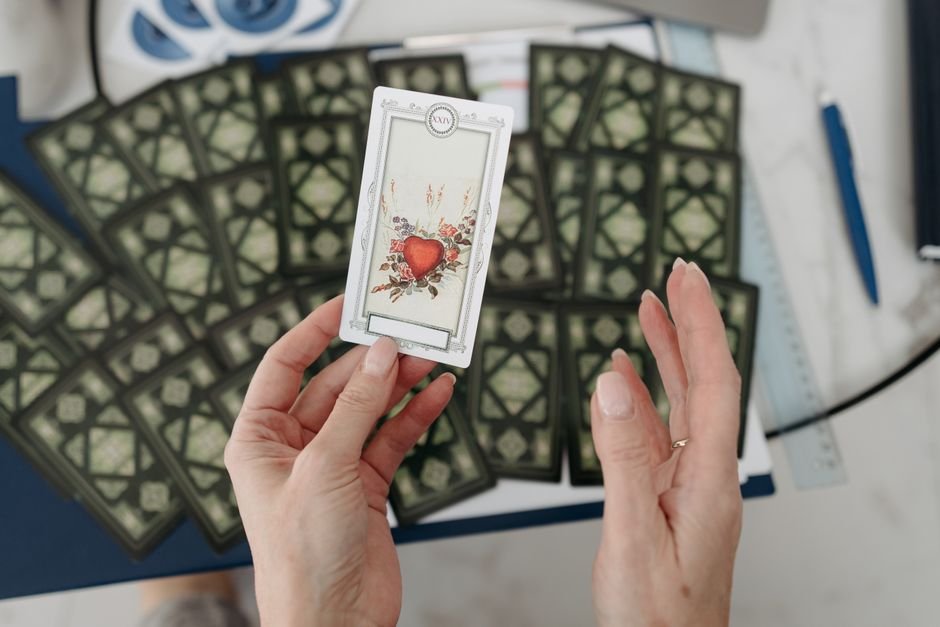
The honest framing matters here: the Tower is one of the most feared cards in the deck, and most of that fear comes from reading it out of context. Used properly — with a clear question, a defined spread position, and attention to the cards around it — it is less a prophecy of doom and more a demand for honesty. This guide walks through both orientations, compares the Tower with the other “hard” love cards so you can tell them apart, and ends with a practical checklist for what to actually do when it lands on your table.
What the Tower Card Means in a Love Reading
The Tower’s imagery is unambiguous: a tall structure struck by lightning, figures falling from its heights, fire at the crown. In love readings every element maps to a relationship dynamic:
- The tower itself is the relationship structure — the routines, assumptions, and promises you both live inside. A tower looks permanent, but the card asks what it is actually built on.
- The lightning strike is the trigger: a sudden revelation, an argument that surfaces everything at once, a third party, a job relocation, a message seen on a phone. Lightning is fast and not negotiated with.
- The falling figures are the identities and plans that no longer fit — the “future spouse” timeline, the image of the partner you were in love with, the version of yourself that stayed quiet to keep the peace.
- The fire at the top is what burns off first: the illusions. What survives a Tower moment is what was real.
Two things the Tower does not mean are worth stating clearly. First, it does not mean your reader is predicting a specific disaster on a specific date — tarot works as a structured reflection tool, and responsible readers treat it that way. Second, it does not automatically mean the relationship ends. In practice, Tower cards in love readings most often mark a forced confrontation with reality, and what happens next depends heavily on how both people respond to the truth that just surfaced.
The Tower Upright in Love: The Shake-Up Arrives
Upright, the Tower is the shock landing. The most common love-reading expressions are:
Sudden endings — but on weak foundations
When a Tower card shows up next to relationship outcome cards, breakups do happen, and they tend to be fast and decisive. But pay attention to what kind of relationship collapses: the card’s core lesson is that structures built on avoidance, unspoken resentment, or an idealized image of the partner cannot withstand a lightning strike. A relationship with genuinely solid ground bends; one with rot at the base falls.
Revelation of hidden truth
Just as often, the Tower is not an ending but an unveiling. Something concealed comes to light — a partner’s true feelings, a secret, an incompatibility both people sensed but never named. This is why the Tower frequently appears in readings where the querent asks “why do I feel something is off?” The card answers: because the gap between the story and the reality just got too wide to hide.
External circumstances forcing a decision
Some Tower events are nobody’s fault: a sudden job offer abroad, a family crisis, a financial shock. In love readings these show up as pressure tests. The card’s practical question is simple — when the convenient excuse to avoid the hard conversation is gone, what do you both actually choose?
The Tower Reversed in Love: The Aftershock You Feel First
Reversed, the Tower’s energy turns inward or gets deferred, and the reading tends to describe one of three situations:
- Delayed collapse. Both partners know something is wrong, but every conversation gets postponed. The reversed Tower warns that postponement does not cancel the reckoning — it just accumulates interest.
- Internal upheaval. The earthquake is happening inside one or both people: a crisis of doubt, falling out of love quietly, questioning the entire relationship while outwardly maintaining the routine. Anxiety, insomnia, and dread before any visible event are classic reversed-Tower signatures.
- Narrow escape — with conditions. Occasionally, especially near cards of healing or commitment, the reversed Tower means the worst was avoided this time. The honest reading is that the underlying fault line still exists and was merely patched.
A word on false hope: the reversed Tower does not mean “disaster cancelled.” If anything, it asks for more maturity than the upright card, because nothing external has forced the issue yet. You still have the choice the upright version takes away.
The Tower vs. Other Hard Cards in Love Readings
Readers confuse the Tower with the deck’s other challenging cards constantly, and the distinction changes the advice you give yourself. This table is the cheat sheet we use when a “dark” card lands in a love spread:
| Card | What It Means in Love | Is It a Breakup Card? | Best Response |
|---|---|---|---|
| The Tower | Sudden upheaval; hidden truth erupts; the false structure falls | Sometimes — it ends what was unstable, transforms what was real | Get grounded fast; face the revealed truth; don’t rebuild on the same fault line |
| Death | Natural ending and transformation; a chapter closes | It ends a phase, not necessarily the relationship | Accept the transition; look for what is being reborn |
| Three of Swords | Heartbreak, painful words, betrayal already felt | Grief card — the wound, not the event | Let the pain be acknowledged; healing work over decisions |
| Ten of Swords | Absolute bottom; over and done; nothing left to lose | Usually yes — but marks the floor, not the fall | Recognize it cannot get worse; the only direction is up |
| The Devil | Unhealthy attachment, dependency, staying for the wrong reasons | No — the trap holds only while you agree to it | Name the chain honestly; reclaim choice |
Quick pattern: Death ends what has ripened, the Three and Ten of Swords describe pain, the Devil describes the cage, and the Tower is the lightning itself — the event that changes everything at speed.
Checklist: What to Do When the Tower Appears in a Love Reading
Card meanings are the easy half. This is the working checklist for the days after a Tower lands:
- Stabilize before deciding. No breakup texts, no ultimatums, no flight bookings in the first 48 hours. Tower adrenaline makes terrible decisions feel urgent.
- Separate the fact from the catastrophe story. Write two columns: what actually happened, and what you fear it means. The second column is usually three times longer.
- Ask what the lightning revealed, not just what it broke. The Tower’s gift is information. A truth that surfaces — even painfully — is more useful than a comfortable lie that keeps you stuck for years.
- Check the foundation before rebuilding. If the relationship survives, rebuild on explicit agreements instead of assumptions. If it ends, the same audit applies to your patterns so the next tower isn’t built the same way.
- Re-ask the cards with a sharper question. “Is everything doomed?” gets doom-flavored answers. A follow-up like “What is mine to rebuild right now?” produces usable guidance.
- Keep perspective on scale. In months, most people describe their Tower period as the moment things finally became honest — even when it did not feel that way in week one. Psychology research on resilience after sudden loss and change consistently finds that grounded routines and social support do more than any single dramatic decision (see the APA’s overview of building resilience).
How to Read the Tower in Context (Without Panicking)
The single biggest mistake with this card is reading it in isolation. Before concluding anything, run this three-step context check:
Step 1 — Check the question. The Tower in a “will we get married” reading means something very different than in a “should I stay” reading. In a yes/no frame, upright Tower trends toward a hard no or a “not as currently structured.” In a “what do I need to know” frame, it is simply flagging the elephant in the room.
Step 2 — Check the neighbors. Flanked by Two of Cups, Ten of Pentacles, or The Lovers, the Tower is more often external pressure or a truth-telling moment inside a relationship worth keeping. Flanked by Five of Cups, the Devil, or Ten of Swords, the collapse reading gets much stronger. If you want a second opinion from a live reader when the spread looks heavy, comparing a few vetted best online tarot reading sites 2026 is a practical way to get one quickly and cheaply.
Step 3 — Check the position. Tower as the “outcome” card describes where things land if nothing changes. Tower as “hidden influences” describes what you already sense but haven’t said. Tower in a “advice” position is almost never about doom — it is telling you to tear down the false structure yourself, on your own terms, while you still control the timing.
Frequently Asked Questions
Is the Tower card always a breakup in a love reading?
No. It signals sudden upheaval and revelation, not automatically an ending. It can mean a hidden truth surfacing, an external shock, or the collapse of a false dynamic. The surrounding cards and your actual question decide whether the relationship ends or gets rebuilt on more honest ground.
What does the Tower mean when asking about an ex?
It usually means the old structure is gone for a reason. The card can show the ex in turmoil, or warn that returning would rebuild the same tower on the same fault line. For reunion questions it is rarely a green light; for “why did it end this way” it is often startlingly accurate.
Can the Tower ever be a good sign in love?
Indirectly, yes. By removing illusions and weak structures it makes room for something real — either a rebuilt relationship with explicit agreements, or the freedom to meet someone actually compatible. Most people, looking back, rate their Tower period as necessary.
How is the Tower different from Death in a love reading?
Death is a slow, natural transformation — a phase completing. The Tower is sudden, external-feeling, and disruptive. Death asks you to let go gracefully; the Tower doesn’t ask. If the spread contains both, expect a fast ending followed by a longer, deeper reinvention.
Should I get another reading after drawing the Tower?
If emotions are high, wait a few days, then re-ask with a specific, forward-looking question. If the Tower keeps reappearing across readings, that is the deck’s way of insisting you deal with the underlying issue directly instead of asking different versions of the same feared question.
The Bottom Line
The Tower card meaning in love, reduced to one sentence: what falls was not going to hold, and what survives is what you build on. Treat it as the most honest card in the deck rather than the cruelest one. Stabilize first, face what the lightning revealed, and rebuild deliberately. And if you would rather talk through a heavy spread with an experienced human reader, the platforms compared in our guide to the best online tarot reading sites 2026 all let you start for under $10 — sometimes a second perspective is exactly what the Tower is pointing you toward.
